
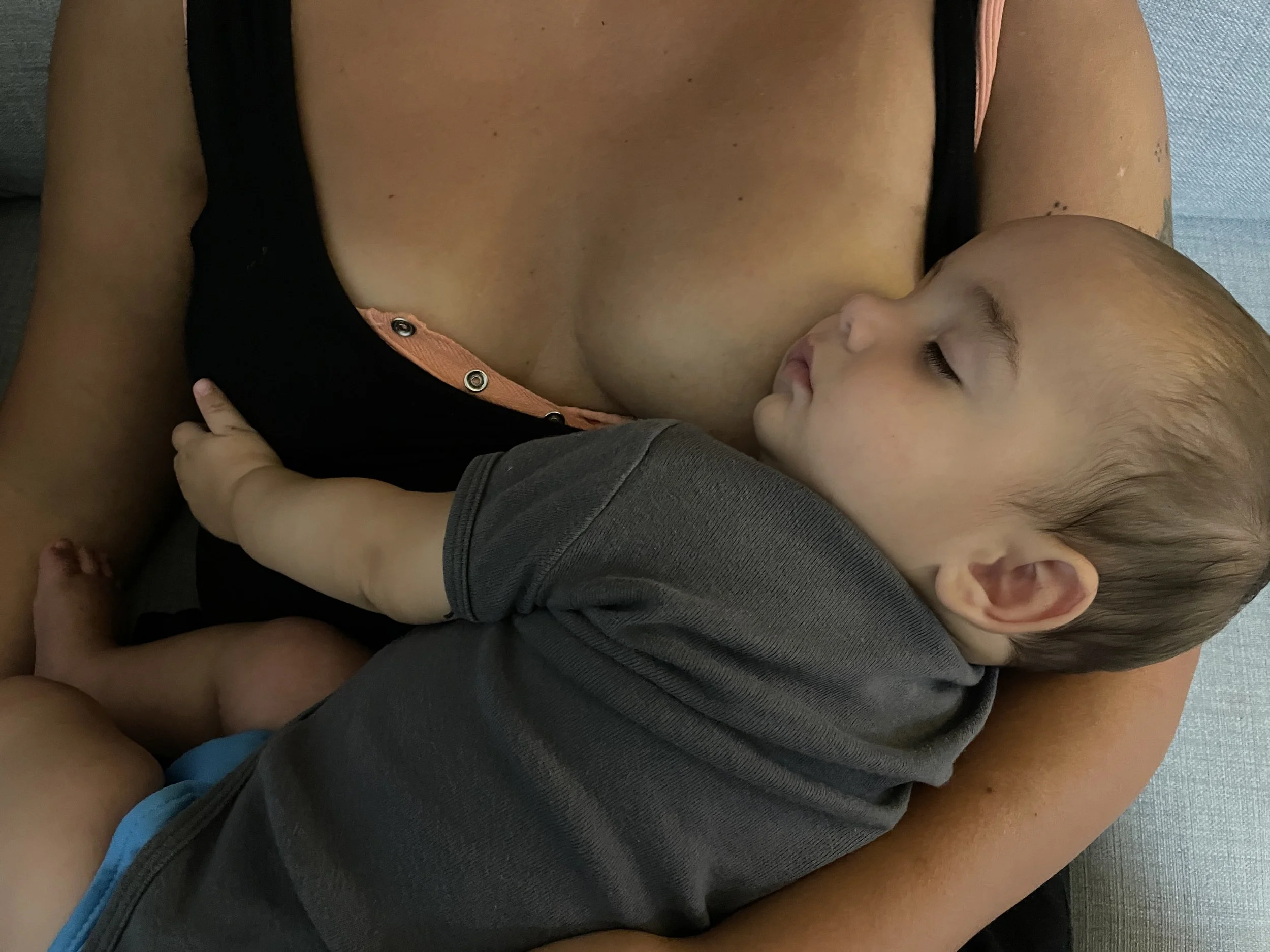
Parenting tells our children a story about the world.
Whose are you telling?
Our culture inundates us with so many messages about infant and early childhood sleep, like
“if you don’t train your baby to sleep, they will never learn to sleep”
“comforting your baby at night creates bad habits”
“strict schedules are the only way you’ll ever teach your baby to sleep”
“babies must learn to independently self-soothe in order to grow into well-adjusted adults”
And hidden in them are others about you as a parent and human:
being highly scheduled is inherently valuable
your inability to control your infant/child’s behavior proves reflects on your worth as a parent
your needs and your baby’s needs are in competition
your instincts to comfort and be close to your baby are wrong and in danger of negatively affecting their development
No wonder you and your baby can’t settle!
We act as if all these stories are natural, inevitable, and commonsensical. But the truth is they have a clear origin story. And they’re at odds with everything we actually know both intuitively and with the best research.
REST EASY: a decolonial approach to sleep and beyond gets to the roots of them. It help you cut through the noise and dig you out of the avalanche of prescriptive advice about sleep that’s probably surrounding you all the time if you have small children, offering information and history, reassurance and stories, so you can actually rediscover and settle into what your bones and cells and intuition already know about yourself and your children and GET SOME SLEEP. Because that avalanche of prescription, so much of which is fear based about the future, is exhausting. And in a time when our energy really matters, we don’t need to waste it on things that prey on our vulnerabilities, that capitalize on the depths of our love for our children, and that exploit the pressures we feel raising them in a world that often doesn’t support us in parenting.
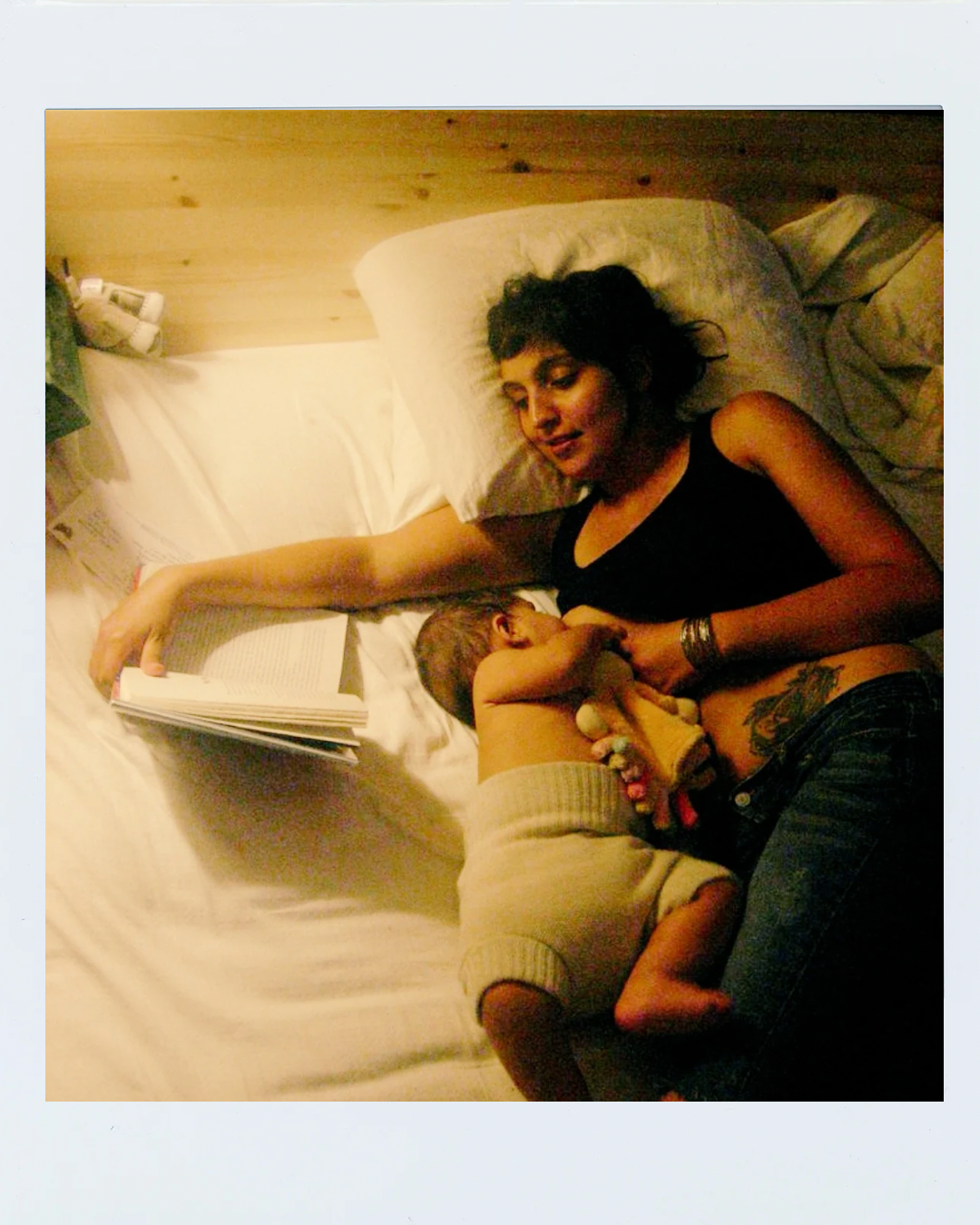
“On the first night after my first child was born, I just stayed awake staring at her in a basket next to my bed.”
“I felt this primal knowing that she wasn’t meant to be away from me, but everyone and everything was telling me co-sleeping was dangerous. I was riddled with fear and surrounded by voices reinforcing those fears. Then someone connected me with Robina. I dug into all her writing and finally felt like I’d found a voice I could trust. This is not your average infant sleep course. You will walk away from this with a critically conscious lens to see how White Supremacy is operating within and around you in regard to infant sleep (and mothering and beyond). Rest Easy offers you a chance to notice and choose differently. Ultimately, this is what lead me to reconnect with my own intuition and find clarity, peace and, of course, better rest.”
Olivia, mom of 3
The course
REST EASY consists of 6 audio modules, each of which take you through history, research, neurobiological data, myth, alternative imaginings, and into a story that feels like your own.
Chapter One: Sleep Goes Solo
Our first chapter covers some of the history of how we got where we are, why we make the assumptions we do about sleep, and who benefits from that. It charts how we moved from near-universal communal sleep practices to solo sleep and how industrialization and colonization inflected this shift. Because the first part of finding a new path is understanding that the old one is constructed and can therefore be deconstructed.
Chapter Two: “Mother Love is a Dangerous Instrument”
Chapter Two continues this history to interrogate the rise of behavioral psychology and “scientific mothering” as forces that fundamentally altered the course of parenting in the West. It charts how connection and attachment became framed as a threat to children's well being and explores why we’ve become so conditioned to trust experts over our own instincts.
Chapter Three: Resisting A Rest
Our third chapter provides an overview of some of the data we have about both responsive sleep and sleep training. It goes into the many myths our modern culture reproduces around infant sleep, most of which, as we will have established in our first two chapters find their roots in colonial capitalism, white supremacy, and misogyny rather than actual data. The chapter provides some insight into how and why the data around sleeping training interventions is equivocal at best, while also reviewing how our evolutionary and biological norms have gotten disrupted and apathologized. It will arm you with the “evidence” you need to support your instincts that responsive sleep is not actually a danger to your baby so you can more confidently create boundaries where you need to, but also so that your nervous system can settle — the actual lynchpin in your rest.
Chapter Four: Keepers of the Knowledge
Chapter Four grounds us in just how profoundly transformative caregiving actually is, and how that can impact our sleep. Using indigenous and neurological frameworks, it explores exactly what nurturance does to our bodies, brains, and spirits. It also contextualizes why it makes sense that the question of sleep – this issue that carries so many cultural stories and assumptions and values, as we’ve seen – looms so large for us so we can ground ourselves in appreciation, understanding, and generosity towards ourselves. It, lastly, presents the radical potential of this neuroplastic state, and the opportunities it provides for healing. Because when we honor the enormity of what has happened to us, we are better able to know what we need in order to thrive — and rest easy — in it.
Chapter Five: The Future Is Now
Chapter Five explores how radically re-orienting ourselves to the present instead of the future can transform our parenting. It contextualizes some of the stories we have around sleep more generally to show how subjective our cultural obsession with infant sleep is, and flips some of our common scripts so we can live in a state that centers interdependence and solidarity rather than competition and comparison. You’ll leave this chapter with a new paradigm through which approach parenting day and night that is more rewarding, more joyful, more rested — and more authentic to you.
Chapter Six: Returning Home to You
Our final chapter shows you how to use the ideas we’ve been discussing to access deep security in our bodes. Now that we recognize the stories we hold about infant and early childhood sleep, notice the cultural forces that profit off those stories, understand why we are so vulnerable to them, and have countered them with some reframes, how do we lovingly care for ourselves, our resistances, and our fears? Together, we gently tend your part of the parenting ecosystem so that you show up not as some theoretical idea but as the truest version of you. Because it’s that person your children — and our world — needs.
Meanwhile, the Rest Easy Workbook provides you with 30+ pages of resources, activities, and practices to help you better access deep rest. It includes:
A guide to White supremacy characteristics and an exploration of where they show up in the way we think about your children’s sleep
Journaling Prompts
Somatic practices to help you get out of imposed stories and into your guts
Rituals for when grief and shame come up
A guide to low-cost, low-effort practices that can help you return home to you
Curated playlists to help access deeper feeling
A list of resources and suggestions for further reading
Glossary and full bibliography of sources and studies
REST EASY also comes with a download of a special collection of songs especially curated for cycle breakers by beloved musician Mama Nous.
Nurturance is our collective past, and it is also our collective future.
We are surrounded by so many fundamentally destabilizing, dehumanizing forces that encourage disconnection, insecurity, and anxiety. Divesting from the values and stories those forces have been imposed on us liberates drains on our souls and bodies we don’t even know are there and that impede our ability to access security and rest.
REST EASY is the first sleep course of its kind that is truly decolonial in its approach. Unlike other courses that will sometimes pay lip service to the way in which capitalism impacts sleep (only to leave most of its assumptions intact), REST EASY truly facilitates the process of not only understanding and appreciating what it means to nurture from within systems and histories that harm us, but to believe in its absolute radical potential, and to truly reimagine what else is possible.
Like having the encouraging voice of a trusted friend or elder in your ear, the course will support you as you move from stressed to settled, from overwhelmed to assured, from undermined to validated, and confident in your innate capacity not just to support this season of parenting, but the ones to come.